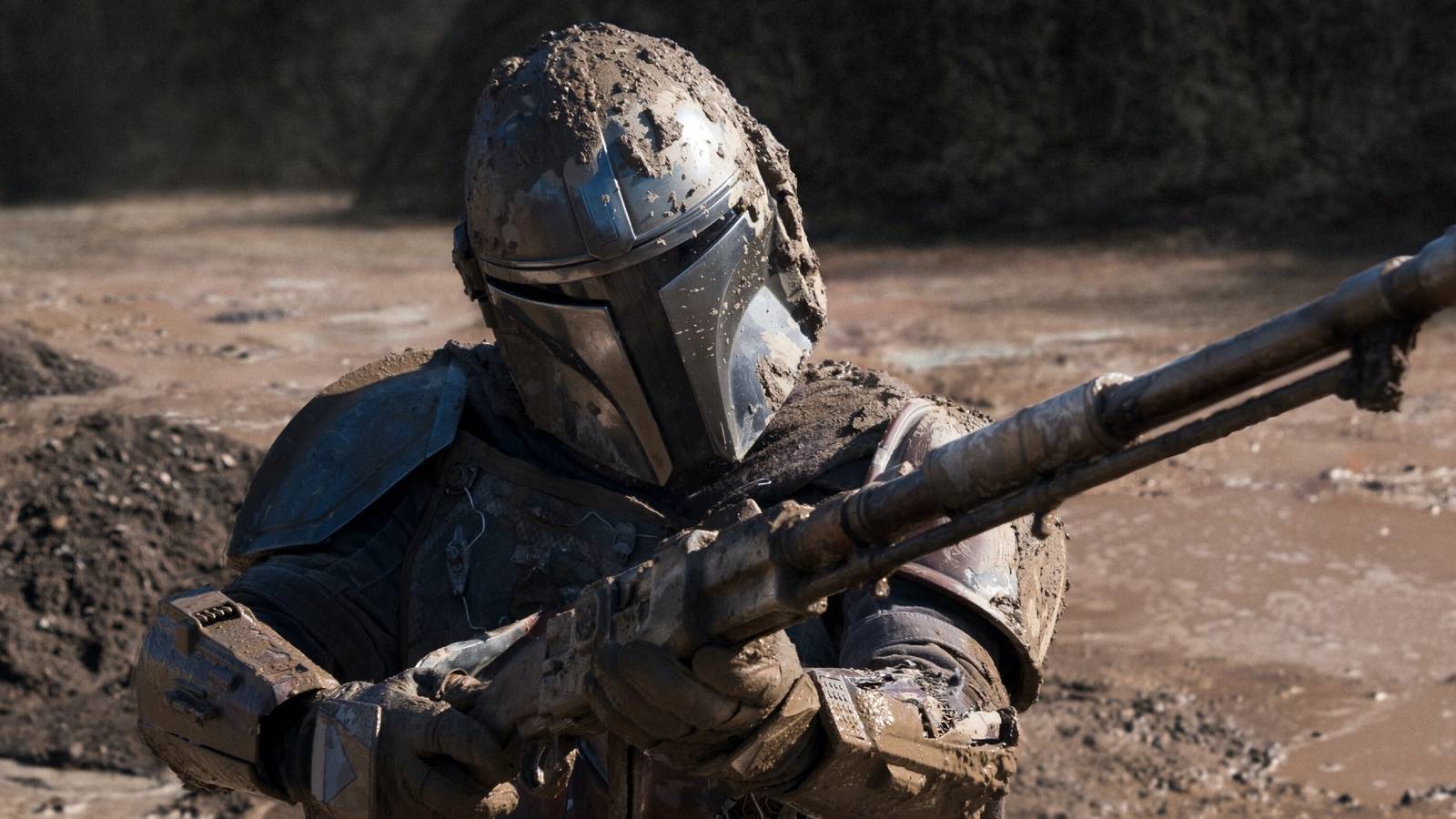
Seven years after Star Wars: The Rise of Skywalker, Star Wars’ new era has become unsustainable. Though the Star Wars sequel trilogy was a massive financial success — even if every installment earned significantly less than the one before — its divisive reception forced Lucasfilm to re-evaluate its storytelling approach. With the launch of Disney+, the solution basically presented itself on a silver platter, and The Mandalorian was the result: a new, standalone Star Wars story set in a relatively unexplored era of the Star Wars timeline, roughly five years after the events of Return of the Jedi.
The Mandalorian season 1 felt like a genuinely fresh beginning for Star Wars. A new medium and a new corner of the galaxy, incorporating a different genre and tone while honoring the worldbuilding that makes Star Wars so special. And yet, it soon became clear that, even after the connective issues that plagued the sequel trilogy, Star Wars was determined to develop The Mandalorian and, more specifically, the New Republic era, into something almost as grand and galaxy-defining as the Skywalker saga.
From The Mandalorian season 2 came post-Return of the Jedi Luke Skywalker, live-action Star Wars: The Clone Wars characters Bo-Katan Kryze and Ahsoka Tano, the return of Boba Fett, and the eventual live-action adaptations of the entire Star Wars Rebels Ghost Crew in Ahsoka season 1. Suddenly, the New Republic was no longer just an era in the Star Wars timeline but an independent sub-franchise. Unfortunately, with each new installment since The Mandalorian season 2 (aside from Star Wars: Skeleton Crew), Star Wars’ Disney+ issues have only grown.
Now, with The Mandalorian and Grogu’s underwhelming theatrical performance and the impending release of Ahsoka season 2, it’s clear the New Republic era has become a tragically unsustainable and contradictory part of Star Wars’ narrative, failing to hold on to what made The Mandalorian so exciting in the first place.
Ahsoka Season 2’s Story Is Too Big For The New Republic Era
The recently released trailer for Ahsoka season 2 teases an epic, all-out war between the returned Grand Admiral Thrawn — another character brought over from Star Wars Rebels and, by extension, Star Wars Legends — and the New Republic. This presents multiple issues, though. Not only does it risk making Ahsoka Tano a secondary character in her own show, especially since she’s currently stuck in a different galaxy far, far away, but it also risks undoing the New Republic’s previously established history.
During the release of the Star Wars sequel trilogy, Star Wars published multiple books and comics to explain the First Order’s rise to power and, crucially, the New Republic’s lacking response. This included Leia Organa’s role in the New Republic and her ousting from the Senate after it became public knowledge that she was Darth Vader’s daughter. In response to her departure and a bombing in the Senate Chambers, Leia built the Resistance, following the New Republic’s ultimately fatal decision to demilitarize its forces in the wake of the Empire’s final defeat.
When Disney de-canonized the entirety of the Star Wars Expanded Universe and rebranded it as Legends, the studio promised that every book, comic, and video game published from 2014 onwards would be equally canon, on the same level as the Star Wars movies and TV shows. Now, however, the inclusion of an all-out war years before the First Order’s rise to power contradicts almost everything established through Star Wars publishing.
If Thrawn does indeed engage the New Republic in a full-blown war, why would the government decide to demilitarize after such a major, sudden conflict? Surely, they’d understand that it needs to maintain a proper defensive strategy, which would undermine Leia’s whole story.
Additionally, Thrawn’s attack on the New Republic needs to involve Leia, at the very least, if not also Luke Skywalker. The Ahsoka season 2 trailer shows the Ghost Crew’s involvement; Leia personally knows them from her one-episode cameo in Star Wars Rebels. It’s all well and good to mention her name in passing during a New Republic council meeting in Ahsoka season 1. It’s another thing entirely to have her miss out on what seems to be such a monumental moment in the galaxy’s history. If Star Wars is still fearful of recasting, however, it won’t work.
While this is clearly Dave Filoni’s canon version of Timothy Zahn’s original Legends-era Heir to the Empire storyline, it’s harder to make an event like this fit into the current status quo without alienating an audience who has never watched either Star Wars Rebels or The Clone Wars, both of which are vital to understanding Ahsoka Tano’s story and the show’s wider conflict. It also unnecessarily complicates the Star Wars timeline. It feels like the New Republic era is needlessly rehashing the past, when The Mandalorian was originally meant to be something entirely new for Star Wars instead.
The New Republic Era Is Stifling Star Wars’ Creativity

Of course, Ahsoka season 2 may prove to be an incredibly fun, insightful, and wild ride, but it’s still impossible to extricate from the surrounding context. The New Republic has pushed Lucasfilm into a corner, one that has stifled its creativity and its narrative opportunities. Take The Mandalorian and Grogu, for example. The Mandalorian season 3 was widely criticized for shifting the focus from Din Djarin and his foundling, Grogu, to a plot concerning Bo-Katan Kryze and the Mandalorians’ reclamation of Mandalore.
Now, the future of The Mandalorian season 4 is still in limbo, while The Mandalorian and Grogu didn’t revitalize the franchise as Disney undoubtedly hoped. Despite focusing on a solitary Din and Grogu adventure, it failed to recapture the magic of The Mandalorian season 1. Neither could it push the New Republic storyline forward in any meaningful way without treading on Ahsoka season 2’s toes. The result was a fun, if superfluous, Star Wars adventure, as proven by the movie’s performance. It’s the lowest-grossing Star Wars movie, earning roughly $50 million less than Solo: A Star Wars Story for a total of $345 million.
What else could it do, though? Every new connection, every new installment makes it that much harder to keep the New Republic era and Star Wars‘ canon intact. Star Wars‘ insistence on revisiting and expanding The Clone Wars and Star Wars Rebels while connecting The Mandalorian, The Book of Boba Fett, and Ahsoka — Star Wars Jedi’s Cal Kestis could just as easily have been the one to connect with Grogu, rather than Ahsoka or Luke — has made the New Republic era unsustainable.
The more it needs to adhere to already established character arcs and canon history, the less the writers and directors can actually experiment in Star Wars‘ playground. The result is stories like The Mandalorian and Grogu and the upcoming second season of Ahsoka. The New Republic culmination movie first teased at Star Wars Celebration 2023 will run into the same problems. At this point, it might be best for Star Wars to focus on a new era altogether.
Star Wars Will Launch A New Era Next Year

Luckily, Star Wars already has a new era in the works. The franchise’s next upcoming theatrical release, Star Wars: Starfighter, will be the first official Star Wars story set after the events of Star Wars: The Rise of Skywalker, approximately five years after Rey first ignited her yellow lightsaber on Tatooine. The standalone movie, which stars Ryan Gosling as pilot Kade Auberon, will follow Kade as he escorts a (potentially Force-sensitive) youngling, played by Flynn Gray, across the galaxy while being chased by terrifying dark forces.
Star Wars: Starfighter arrives in cinemas on May 28, 2027.
While there are some expectations for this era, namely the development of Rey’s new Jedi Order, Star Wars creatives will have a clean slate to work with. New heroes, new villains, new planets, new conflicts; the galaxy is their oyster. Any stories set in this era won’t need to fit into decades of established history or deal with the constant looming shadow of legacy characters like Luke and Leia. As loved as they are, their potential appearance at any time will always have an influence.
It’s arguably even more exciting a prospect than The Mandalorian and the New Republic era were when the show first premiered on Disney+ all those years ago. It will need to apply Star Wars’ worldbuilding rules and respect the franchise’s history, of course, but crucially, it won’t be building towards anything in particular. Aside from the original trilogy and, to an extent, Star Wars: The High Republic, no other Star Wars story has really ever had that kind of narrative freedom. While Star Wars hasn’t always handled the New Republic well, this new era could be exactly what the franchise needs to reset itself.
Ahsoka season 2 premieres January 20, 2027, only on Disney+.
- TV Show(s)
-
The Mandalorian, Andor, Obi-Wan Kenobi, The Book of Boba Fett, Ahsoka, The Acolyte, Star Wars: Skeleton Crew, Lando, Star Wars: The Clone Wars, Star Wars Rebels, Star Wars: The Bad Batch, Star Wars: Resistance, Star Wars: Young Jedi Adventures, Star Wars: Visions
- Cast
-
Mark Hamill, James Earl Jones, David Prowse, Carrie Fisher, Harrison Ford, Daisy Ridley, Adam Driver, Ian McDiarmid, Ewan McGregor, Rosario Dawson, Lars Mikkelsen, Rupert Friend, Moses Ingram, Frank Oz, Pedro Pascal
- Movie(s)
-
Star Wars: Episode I – The Phantom Menace, Star Wars: Episode II – Attack of the Clones, Star Wars: Episode III – Revenge of the Sith, Star Wars: Episode IV – A New Hope, Star Wars: Episode V – The Empire Strikes Back, Star Wars: Episode VI – Return of the Jedi, Star Wars: Episode VII – The Force Awakens, Star Wars: Episode VIII – The Last Jedi, Star Wars: Episode IX- The Rise of Skywalker, Rogue One: A Star Wars Story, Solo: A Star Wars Story, Star Wars: The Clone Wars, Star Wars: Dawn of the Jedi, Star Wars: New Jedi Order
PakarPBN
A Private Blog Network (PBN) is a collection of websites that are controlled by a single individual or organization and used primarily to build backlinks to a “money site” in order to influence its ranking in search engines such as Google. The core idea behind a PBN is based on the importance of backlinks in Google’s ranking algorithm. Since Google views backlinks as signals of authority and trust, some website owners attempt to artificially create these signals through a controlled network of sites.
In a typical PBN setup, the owner acquires expired or aged domains that already have existing authority, backlinks, and history. These domains are rebuilt with new content and hosted separately, often using different IP addresses, hosting providers, themes, and ownership details to make them appear unrelated. Within the content published on these sites, links are strategically placed that point to the main website the owner wants to rank higher. By doing this, the owner attempts to pass link equity (also known as “link juice”) from the PBN sites to the target website.
The purpose of a PBN is to give the impression that the target website is naturally earning links from multiple independent sources. If done effectively, this can temporarily improve keyword rankings, increase organic visibility, and drive more traffic from search results.